
5 Warning Signs Your Stone Basement Foundation Needs Attention
· wpfallssilo
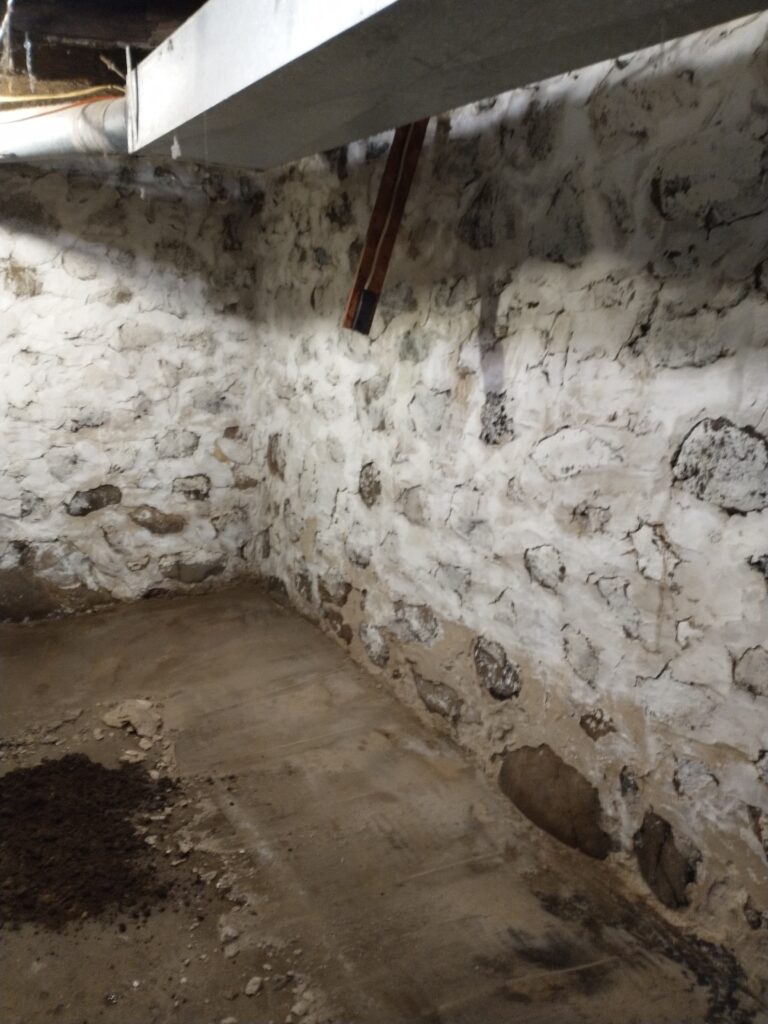
Older stone basement foundations are common throughout Wisconsin. Many have been in service for generations. But the mortar between the stones can deteriorate, water can work its way into the wall, and sections of the foundation can start to move.
Here are five things I tell homeowners to look for when they are concerned about an older stone foundation.
1. Mortar that is missing or turning to sand
Take a close look at the mortar joints between the stones. If the mortar is soft, crumbling, falling out, or can be brushed away easily, it is worth having the wall evaluated. Mortar holds the stonework together, and widespread deterioration is different from a few worn joints.
2. Loose or shifting stones
Stones that have moved out of place, fallen out, or left open pockets in the wall need attention. Don’t try to push a loose stone back into a wall that is supporting the building. Some repairs require temporary support and a closer look at what is happening behind the stonework.
3. Bowing, bulging, or leaning walls
Look along the length of the wall, not just at one spot. A section that is leaning or bulging inward can indicate movement or pressure from the surrounding soil. If a wall appears to be actively moving or is in danger of failure, keep people away from the area and have it assessed promptly by a qualified structural professional.
4. Cracks that are growing
A crack that changes size, a widening joint, or separation at a corner deserves a closer look. You can take dated pictures to help document changes, but don’t rely on photos alone when structural movement is suspected.
5. Water entering through the stonework
Water stains, wet mortar, and seepage can contribute to deterioration over time. Fixing drainage and water issues is an important part of protecting the foundation. A wall coating by itself is not a substitute for addressing the source of the water.
Does the wall need tuckpointing or Gunite?
Not every foundation requires the same approach. If the stones are stable and only a limited number of mortar joints need attention, tuckpointing may be sufficient. For more widespread deterioration, restoring the wall with dry-mix Gunite may be worth considering. Applied to properly prepared stonework, Gunite creates a dense, continuous repair layer. The condition of the existing wall determines what work is appropriate; more serious structural issues can require an engineer’s input.
At Premier Gunite LLC, we work on stone basement and barn foundations throughout Wisconsin. Our crews use the dry-mix Gunite method in the field, and we understand the importance of proper preparation before applying material.
Start with a few photos
If your stone foundation is showing some of these signs, email Chad a few clear pictures of the wall and your property location. We can review them and determine whether to arrange a free onsite estimate.
Email Chad: chad@premiergunitellc.com
Foundation repair: 608-315-5029
Learn more about our stone foundation restoration work.
Premier Gunite LLC — Building Solid Solutions.
Leave a Reply